
Reverse Engineering in Los Angeles
Reverse Engineering Services in Los Angeles
We turn physical parts into editable CAD. Scan at our Glendale studio or on-site anywhere in Los Angeles, then get a parametric solid model in SolidWorks, Fusion 360 or Rhino — with design intent, not a traced mesh — ready for CNC, casting, molding or 3D printing.
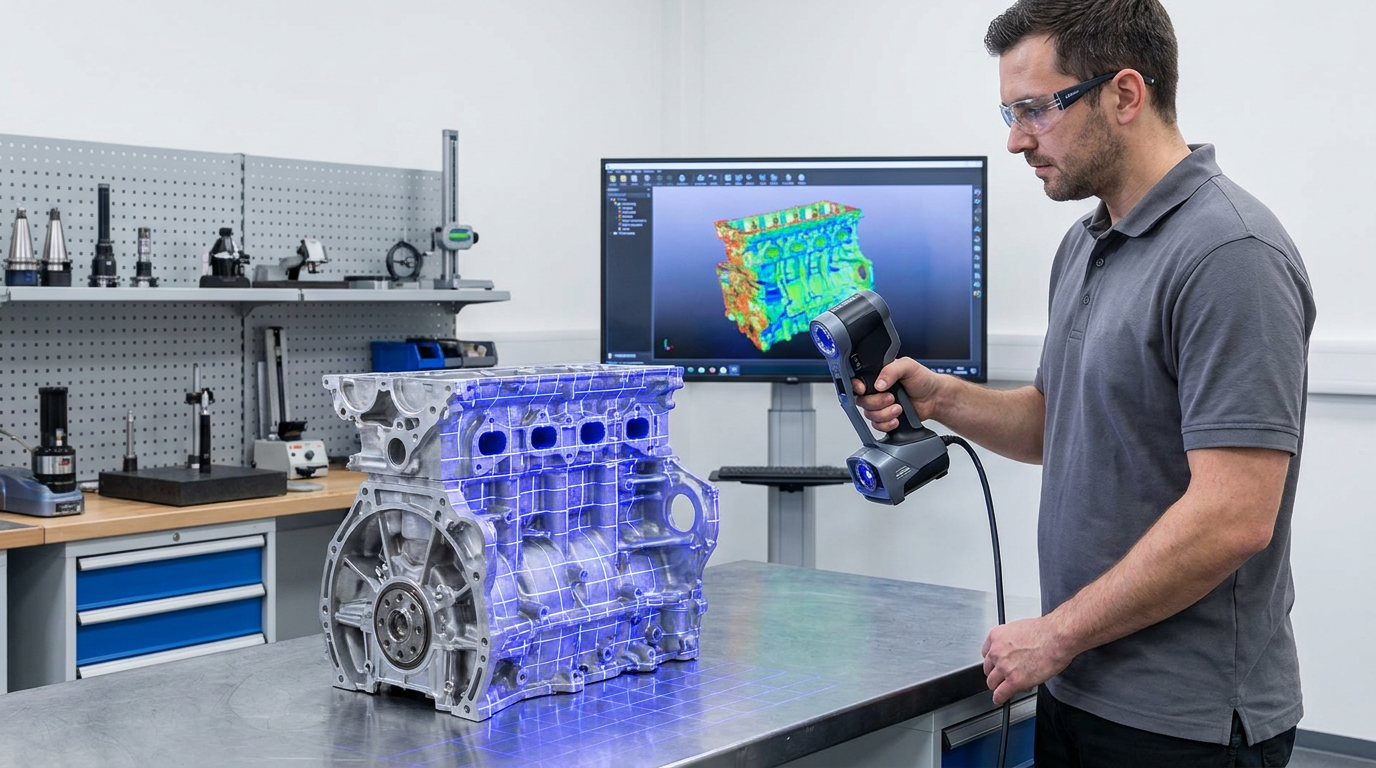
Scanning Technologies We Use
We offer white light, blue light, and laser scanning. Our engineers choose the technology that best fits your part’s size, portability needs, and accuracy requirements.
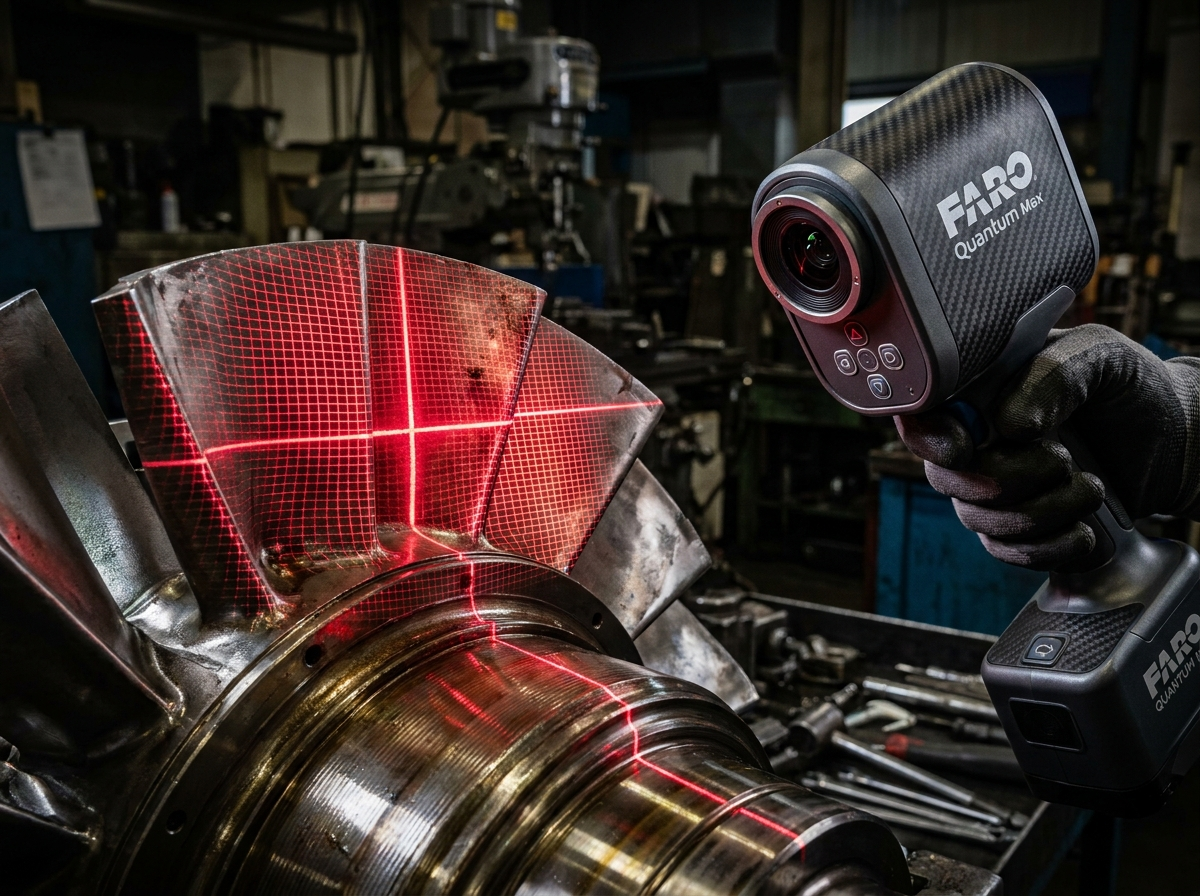
Laser 3D Scanning
A laser beam is projected onto the object and sensors measure the reflected light, building a detailed, high-precision 3D model. Handheld or fixed setups for objects of any size.
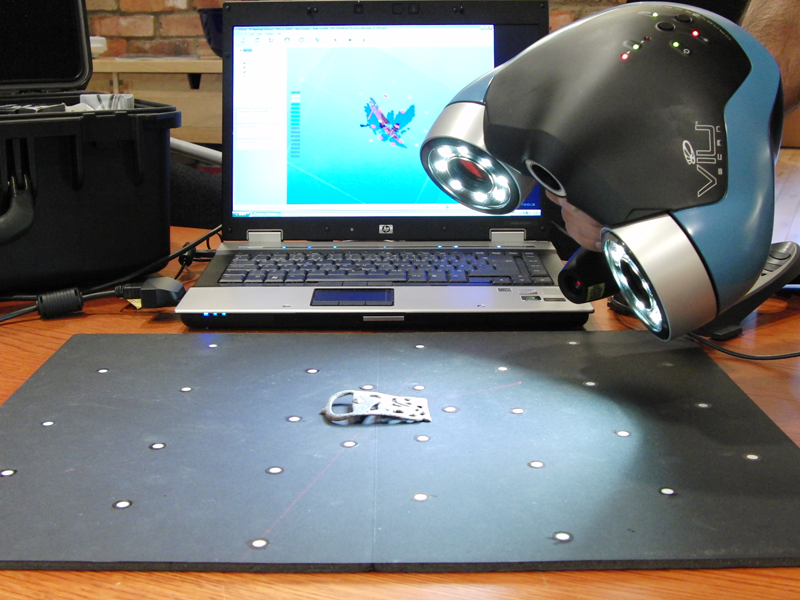
Structured Light Scanning
A projected light pattern is analyzed by cameras to calculate precise geometry — versatile and accurate for industrial and design applications.
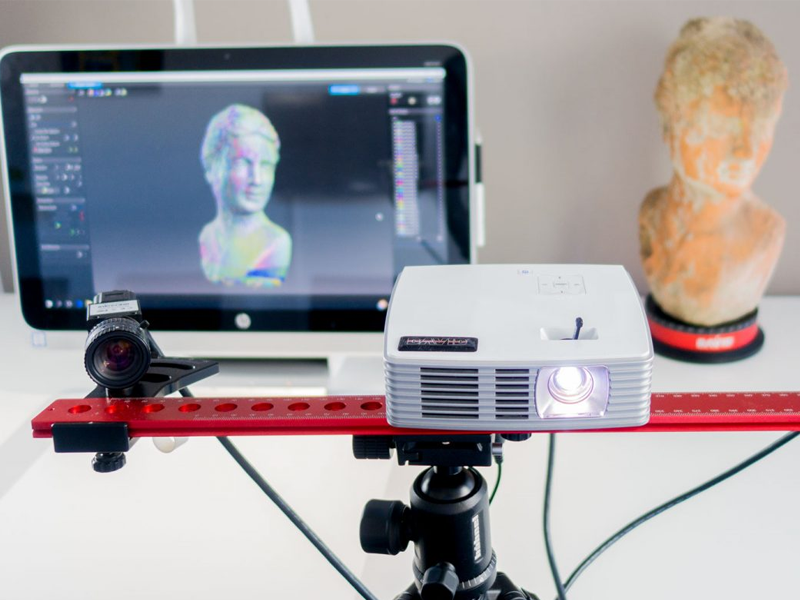
Photogrammetry
Overlapping photographs from multiple angles are processed into a 3D model — ideal for large scenes and objects, using specialized cameras or drones.
Industries We Scan For
From production parts to precious artifacts, our scanners handle it all.
Automotive
Reverse engineering, quality control, inspection, and tooling for production parts
Aerospace
Precision scans for design, testing, inspection, and recreating legacy parts
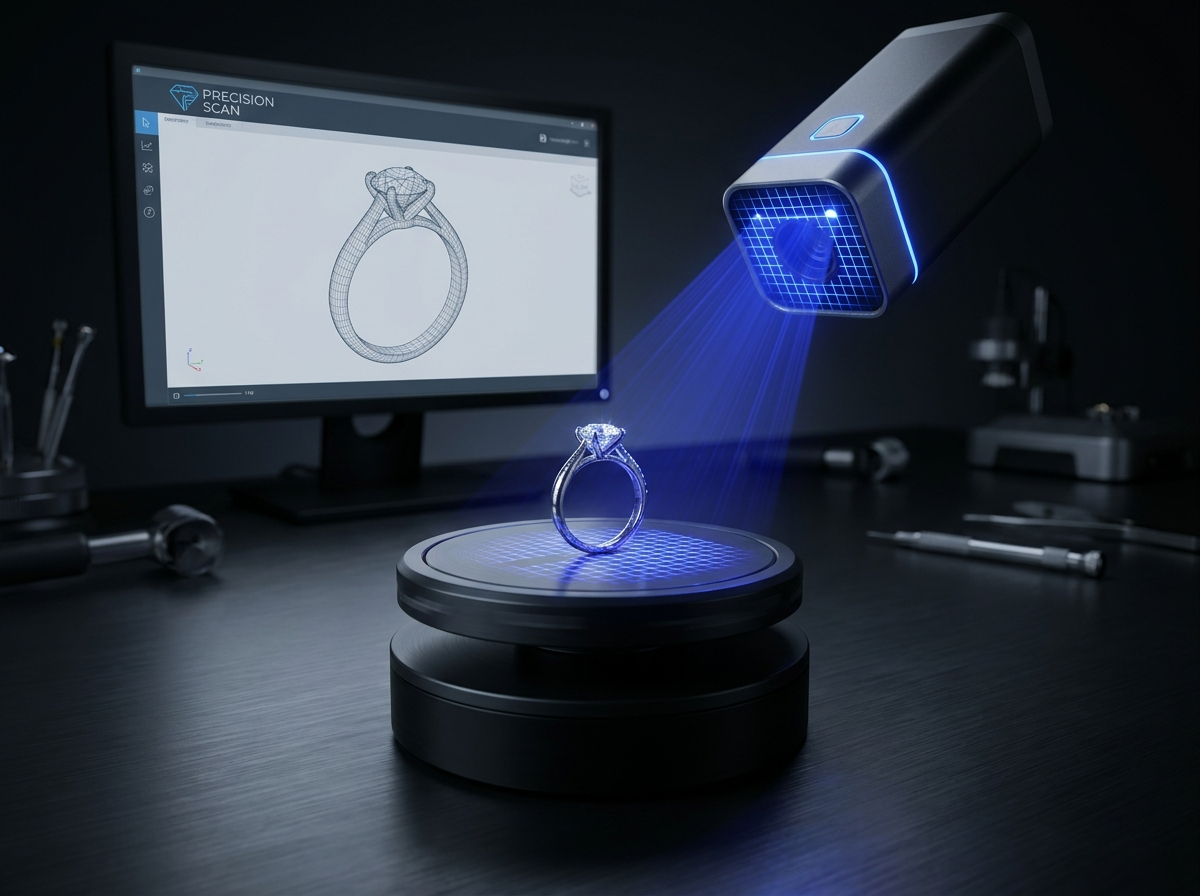
Jewelry
Up to 16 million data points per scan captures intricate pieces for repair, duplication, or redesign
Medical & Dental
Prosthesis modeling, medical device customization, and digital dentistry
Antiques & Sculpture
Digital preservation, virtual restoration, and reproduction of artworks
Fashion & Retail
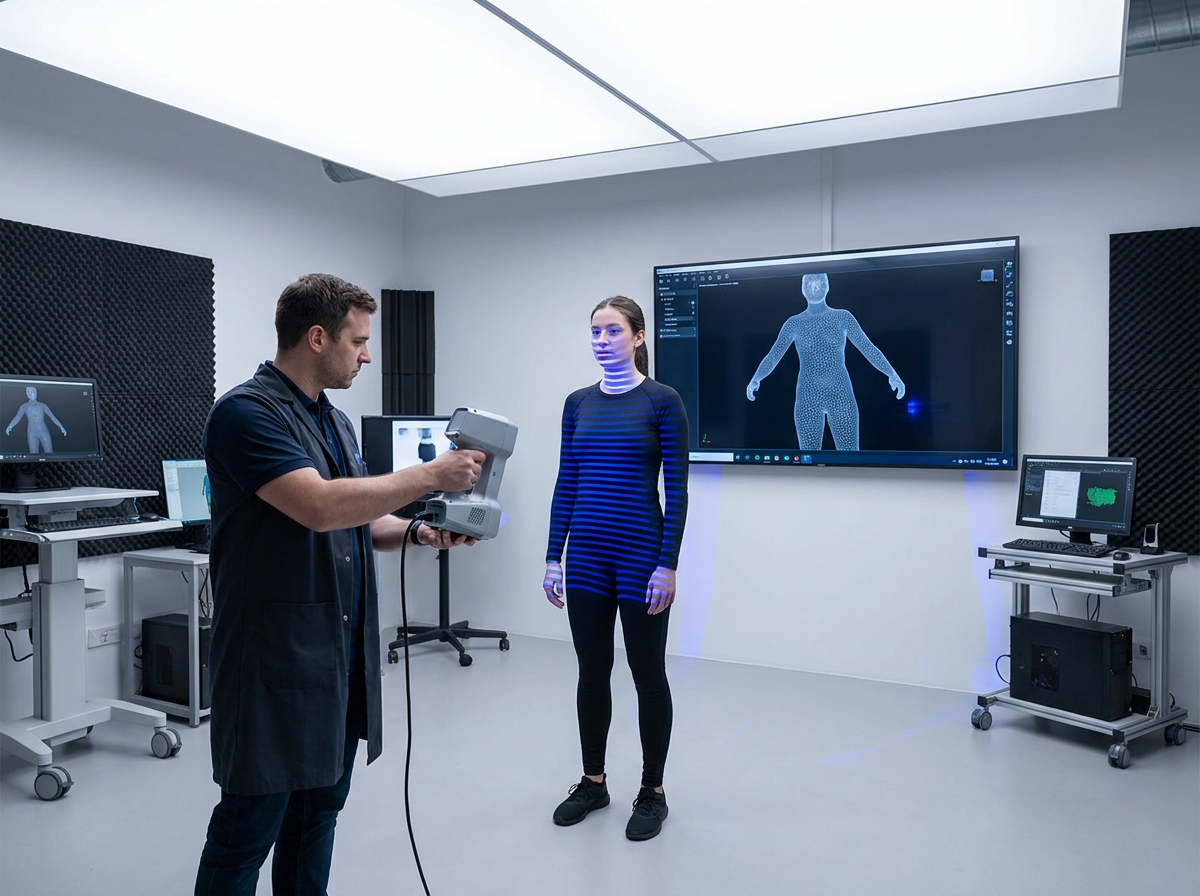
Precise body and product measurements for custom-fit products
Reverse Engineering & Inspection
Scanning is the first step — the real value is what we deliver afterward.
Reverse Engineering
We convert scan data into parametric solid CAD models — built with traditional solid modeling techniques over the scanned reference — so you get fully editable files for your design system. Ideal for legacy parts and tooling no longer in production. Continue seamlessly into product design or 3D printing.
Inspection
We compare scans of your manufactured parts against the original design and deliver a comprehensive inspection report — complete data even on complex, curved, or ductile parts that traditional measurement cannot handle.
From Scan to CAD
From intricate jewelry to full-body scans — powerful post-processing software turns raw scan data into high-quality 3D CAD models or inspection reports.
How It Works
From part to digital model in three steps.
Send or schedule
Ship your parts to our Los Angeles studio — or we come to you. Our portable systems scan parts too large or heavy to ship, anywhere.
We scan & process
Our engineers pick the right technology, capture the data, and convert it into a mesh, parametric CAD model, or inspection report.
Delivery
Files arrive in your preferred formats (STEP, STL, OBJ) ready for design, manufacturing, or documentation.
Recent Reverse Engineering Projects
Real jobs from our Glendale studio, taken from our customer reviews. In both cases there were no drawings and no replacement part to buy, only the broken original.
Discontinued A/C control knobs
A customer brought in broken control knobs from an in-wall air-conditioning unit. The manufacturer no longer makes them. We reproduced working replacements from the broken originals.
Antique furniture part
A customer needed a replacement part for a piece of antique furniture and could not find one anywhere. We 3D scanned the broken part and recreated it with 3D printing.
Scan Accuracy by Method
We choose the scanning method to match the tolerance your part needs. Typical accuracy on small and mid-size parts:
| Method | Typical accuracy | Best for |
|---|---|---|
| Laser scanning | ±0.02–0.05 mm | Mechanical parts where mating fits matter; our default for reverse engineering |
| Structured light scanning | ±0.05–0.1 mm | Organic shapes, consumer products and sculptural work |
| Photogrammetry | Millimeter range, scales with object size | Large objects and full-color visual models |
Every reverse engineering deliverable includes a deviation report showing the accuracy achieved against the scan. For more detail, read how accurate 3D scanning is.
Frequently Asked Questions
What do I receive after a scan?
Depending on your goal: a high-resolution mesh (STL/OBJ), a fully editable parametric CAD model (STEP), or a comprehensive inspection report comparing the part to its original design.
Can you scan very large or heavy objects?
Yes. Many of our systems are fully portable — our team travels to your location to scan parts that are too large or heavy to ship.
Can you scan small, intricate items like jewelry?
Yes. Our jewelry-grade scanner records up to 16 million data points per scan, capturing fine surface detail for repair, duplication, or redesign.
What is reverse engineering?
Turning a physical part into an editable CAD model. We scan the part, then rebuild it as a parametric solid model you can modify and manufacture — see our product design services.
Get a Free Quote Today
Tell us about your part or project and we will recommend the right scanning approach with pricing the same day. Call 213 489 1173 or email design@ecadcam.com.
Request a QuoteWhat you get from reverse engineering
- Parametric CAD (STEP, IGES; native SolidWorks, Fusion 360 or Rhino on request): a feature-based model with dimensions, fillets and holes you can edit — not a traced mesh.
- Manufacturing drawings: 2D drawings with GD&T on request.
- Scan-to-CAD deviation report: color map and tolerance table showing where the CAD deviates from the scanned part.
- Print-ready mesh (STL/OBJ): when a replica is all you need.
When reverse engineering is the right tool
- Discontinued or legacy parts with no drawings — classic cars, aircraft interiors, industrial machinery, film props
- Worn or broken parts that must be reproduced to original dimensions
- Supplier or competitor parts you need to fit to, mate with or replace
- Hand-sculpted masters (jewelry, product design, sculpture) that need to become manufacturable CAD
- As-built documentation of tooling, fixtures and molds
How the process works
- Scan — structured-light or laser capture at our Glendale studio; large parts are scanned on-site anywhere in Los Angeles County.
- Model — an engineer rebuilds the part as a solid model over the scan reference, restoring nominal dimensions (a worn 10.02 mm bore becomes a 10.00 mm design bore) and capturing design intent.
- Verify and deliver — the CAD is compared back to the scan; you receive the model, a deviation report and the raw mesh.
Reverse engineering pricing in Los Angeles
Scan-to-CAD projects typically start around $500 for simple brackets and housings and run to several thousand dollars for complex assemblies or freeform surfaces. The biggest cost driver is surface type: prismatic parts (flat faces, holes, fillets) model quickly; organic or Class-A surfaces take longer. Send photos and dimensions for a same-day estimate, and see how much 3D scanning costs for the scanning portion.
Related guides
- 3D scanning for reverse engineering: how it works and when you need it
- 3D scanning for quality inspection: scan-to-CAD comparison
- 2D to 3D CAD conversion: old drawings into manufacturing-ready models
- 3D scanning for classic car restoration
- CAD design for injection molding
Reverse engineering FAQs
What file formats do you deliver?
STEP and IGES for any CAD system; native SolidWorks, Fusion 360 or Rhino files on request; STL and OBJ meshes for 3D printing.
How accurate is the CAD model?
Accuracy depends on the scanner and part size; every deliverable includes a deviation report that states the achieved accuracy against the scan. The CAD itself is modeled to nominal design dimensions.
Can you reverse engineer a part that is broken or worn?
Yes. We scan what exists, restore symmetry and nominal dimensions, and model missing geometry from the intact side or reference photos.
Do I need to ship the part?
Small parts can be mailed or dropped at our Glendale studio; anything large is scanned on-site in the Los Angeles area.
How long does it take?
Simple parts typically take 2–4 business days; complex assemblies 1–2 weeks. Rush service is available.
Do you sign NDAs?
Yes, before you send anything.